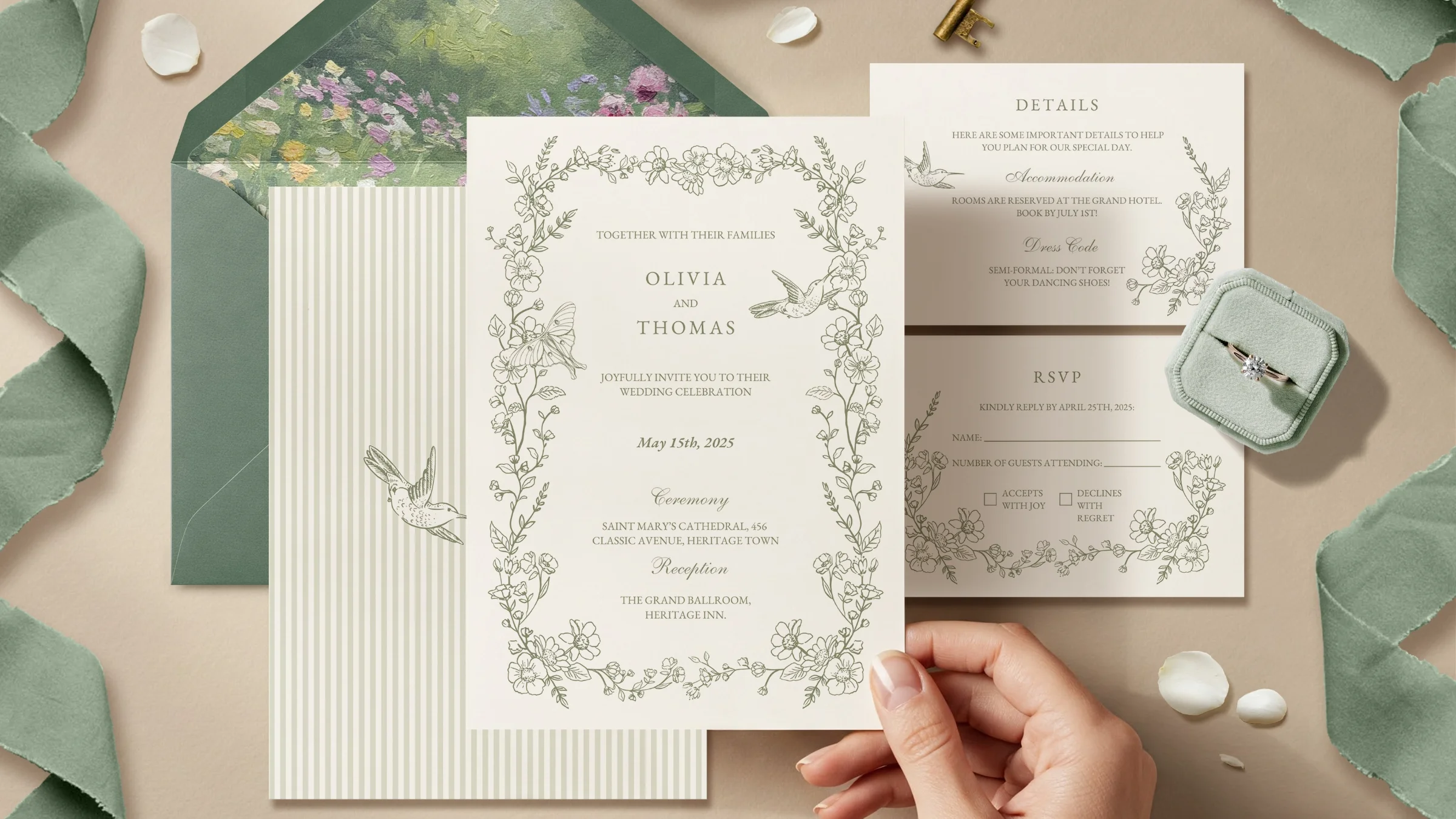
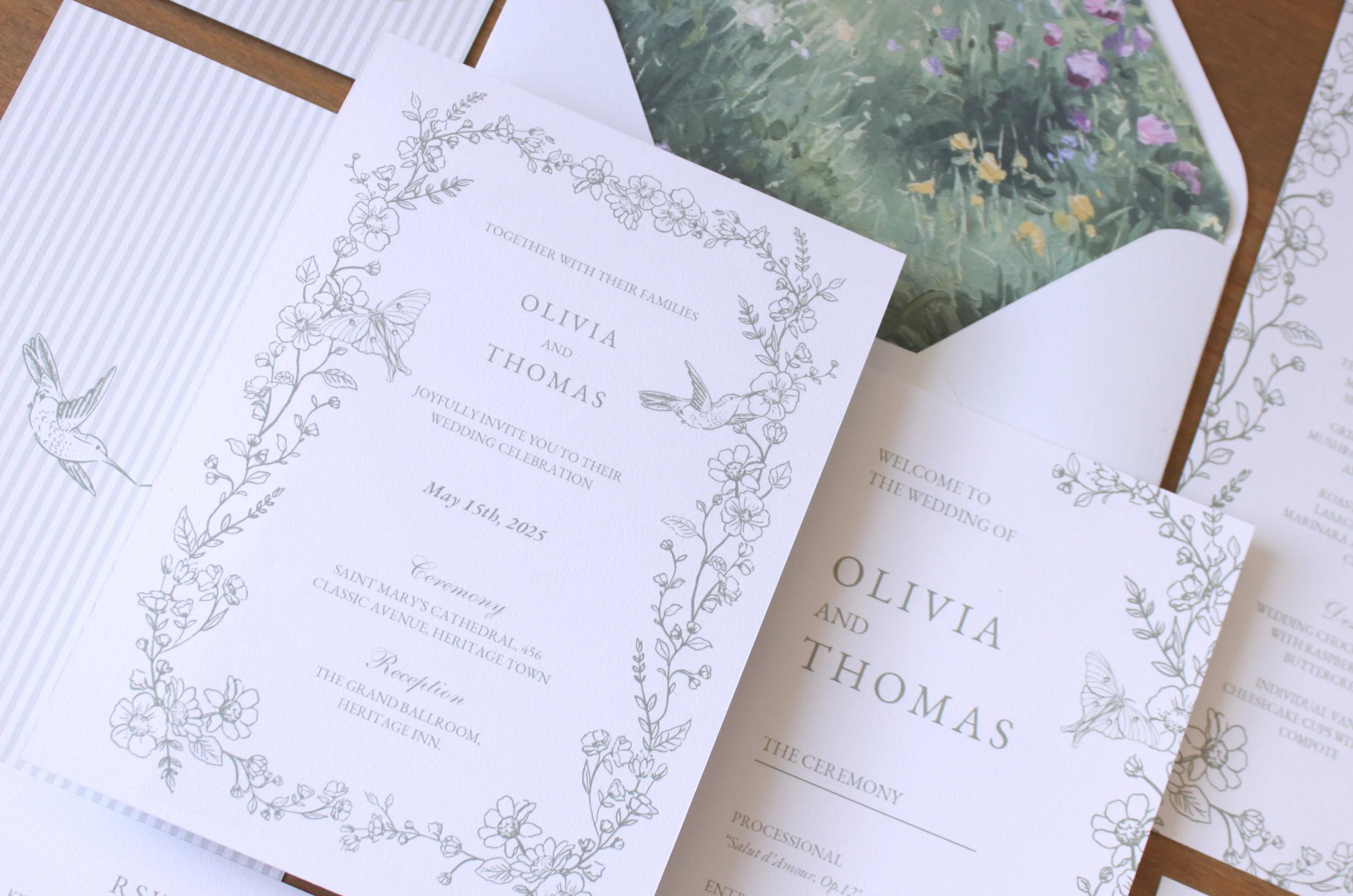
Of everything on your wedding to-do list, the invitation wording is the part that stresses people out the most. It's only a handful of lines, but they're going out to the people who matter the most to you, they're supposed to follow etiquette, and nobody ever explains the rules.
Good news: there are no real rules anymore. There's a structure, a few traditions worth knowing, and a lot of room to sound like yourself.
What goes on a wedding invitation
Every invitation, formal or casual, is built from the same six lines. Once you see them, the whole thing stops feeling mysterious:
Host line: who's inviting everyone (and often, who's paying)
Request line: the actual invitation ("request the pleasure of your company")
The couple: your names
Date and time
Location: venue name and city
Reception line: where to go after, or a quick "reception to follow"
That's it. The art is just deciding how formal each line sounds. Let's go through them.
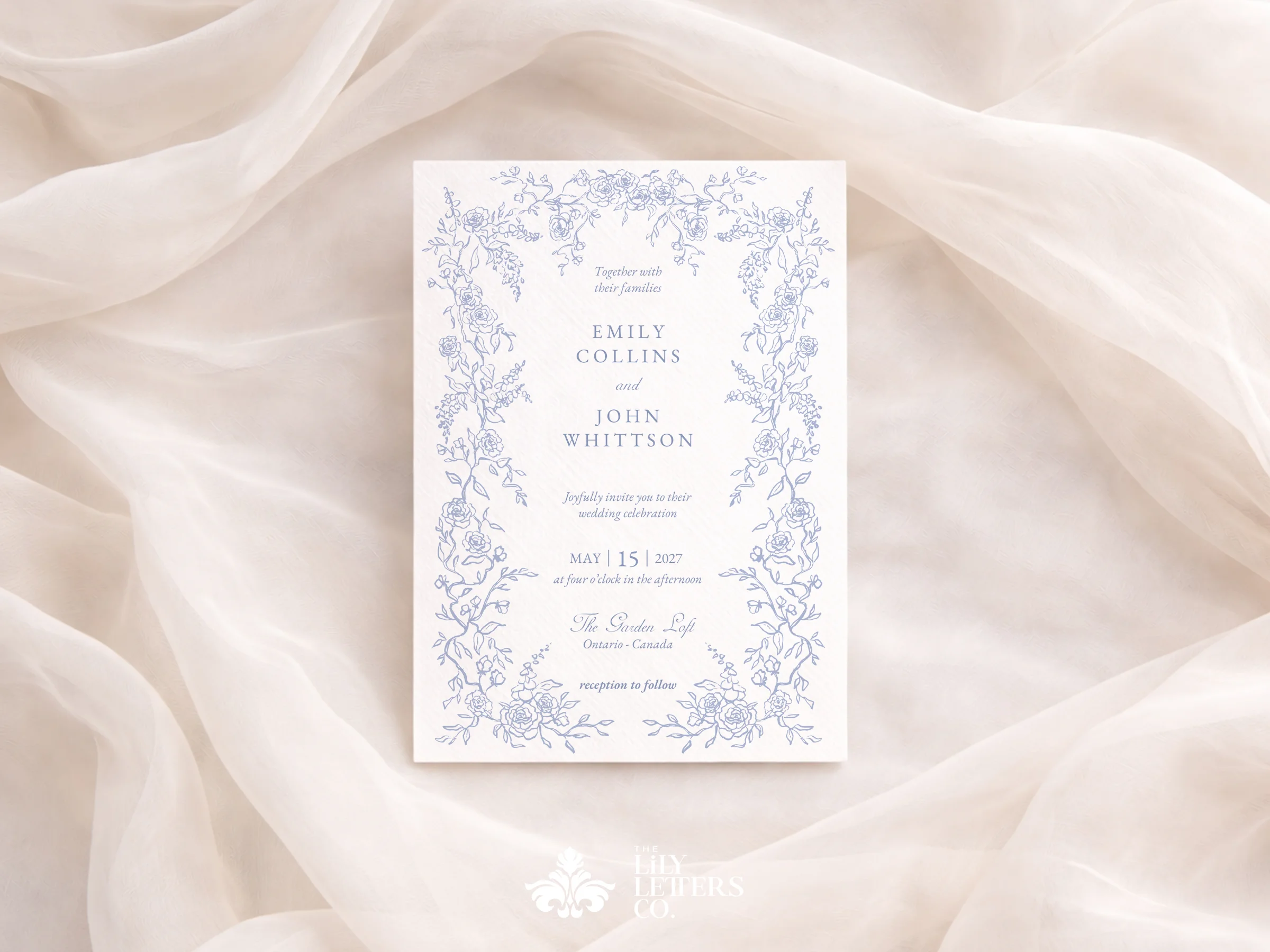
Line 1: The host line
The host line traditionally names whoever is paying, historically the bride's parents. Today it's more about who you want to honor, and listing both families is always a gracious choice no matter who's footing the bill.
If the bride's parents are hosting:
Mr. and Mrs. James Anderson request the pleasure of your company at the marriage of their daughter
If both sets of parents are hosting:
Together with their families
If you and your partner are hosting yourselves:
Together with full hearts [Your Name] and [Partner's Name] invite you to celebrate their marriage
"Together with their families" is the most popular modern host line because it avoids the whole who-paid question and includes everyone.
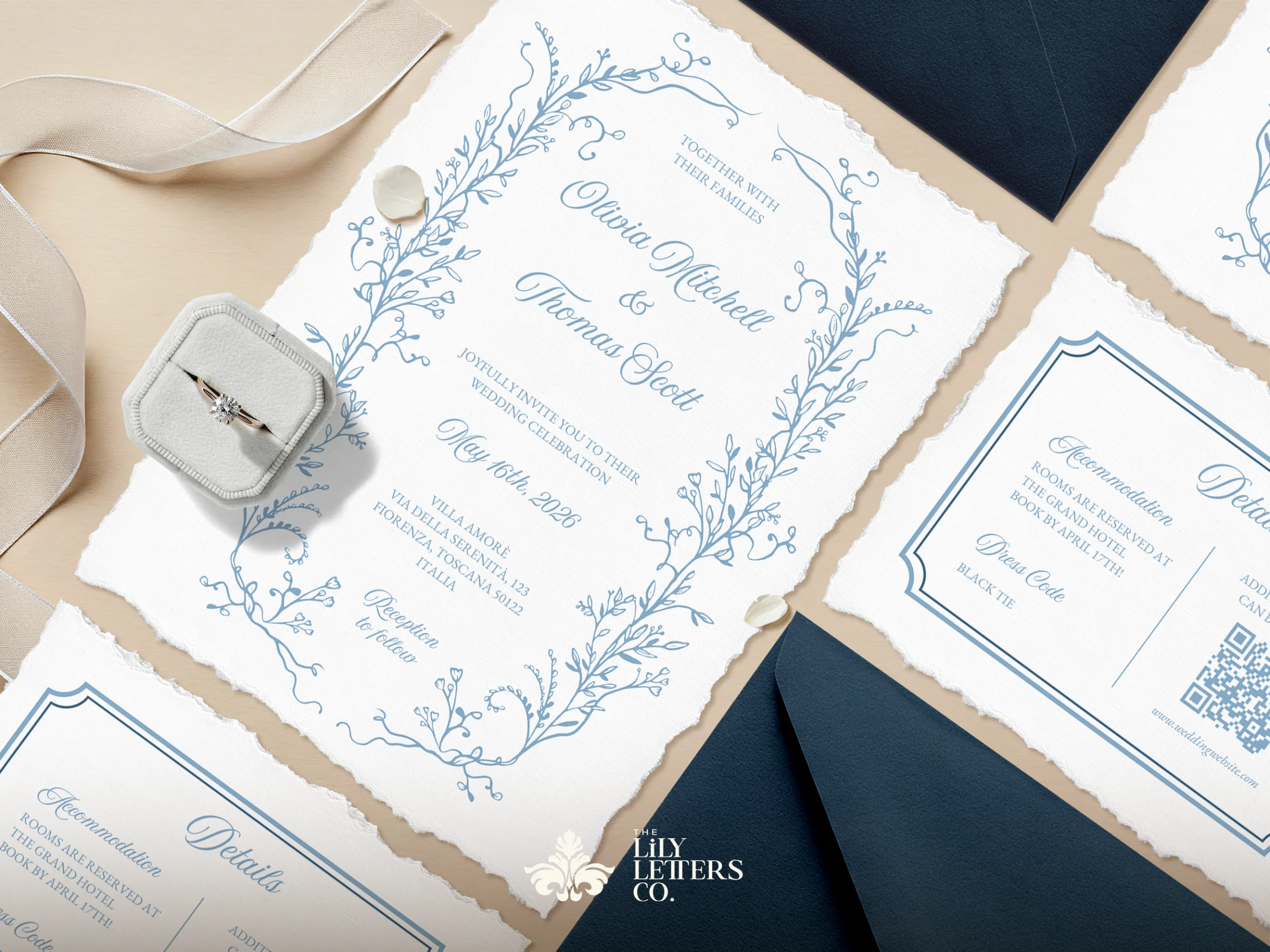
Line 2: The request line
This is the formal "you're invited" line, and the wording signals how formal your wedding is.
Formal / religious ceremony:
request the honour of your presence
(The British spelling: honour, favour, reads as more traditional. If you use it here, match it on your RSVP card.)
Semi-formal or non-religious:
request the pleasure of your company
Casual:
would love for you to join them or invite you to celebrate with them
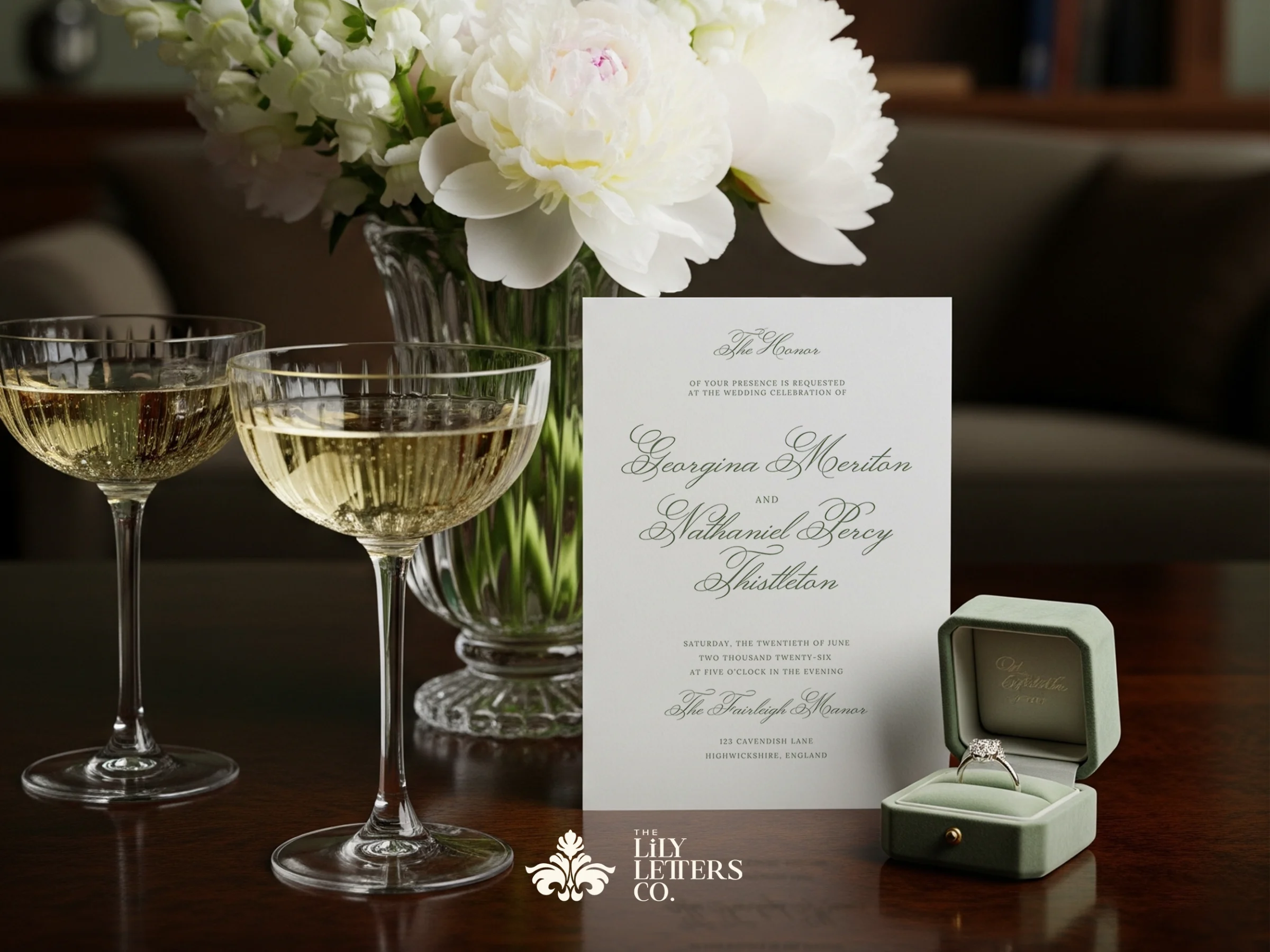
Lines 3–6: Names, date, time, and place
A few small conventions worth knowing:
Formal invitations spell everything out: "Saturday, the fourteenth of June, two thousand twenty-six, at half past four in the afternoon." No numerals.
Casual invitations use numbers: "Saturday, June 14, 2026, at 4:30 in the afternoon."
List the venue and city, but you don't need the full street address on the invitation itself (that goes on a details card).
"Reception to follow" is enough if the party is at the same place. If it's elsewhere, name it.

Copy-and-paste wording examples
Here are three complete invitations at three formality levels. Swap in your details and you're done.
Formal (parents hosting)
Mr. and Mrs. James Anderson request the honour of your presence at the marriage of their daughter
Emma Rose to Jonathan Michael Williams
Saturday, the fourteenth of June two thousand twenty-six at half past four in the afternoon
The Grand Hall Charleston, South Carolina
Reception to follow
Semi-formal (together with families)
Together with their families
Emma Anderson & Jonathan Williams
joyfully invite you to celebrate their wedding
Saturday, June 14, 2026 · 4:30 in the afternoon The Grand Hall · Charleston, SC
Dinner and dancing to follow
Casual (couple hosting)
Emma & Jonathan are getting married!
We'd love for you to join us Saturday, June 14, 2026 at 4:30 pm The Grand Hall, Charleston
Stay for dinner, drinks, and dancing

A few etiquette questions that always come up
Do we have to use "honour of your presence"?
No. Use it for religious or formal weddings; pick a warmer phrase for anything else.
Whose name goes first?
Traditionally the bride's. Same-sex couples and modern couples often go by what sounds better or alphabetical, there's no wrong answer.
Where do dress code and RSVP info go?
Not on the main invitation. Those belong on a details card and RSVP card, which keeps your invitation clean and readable.
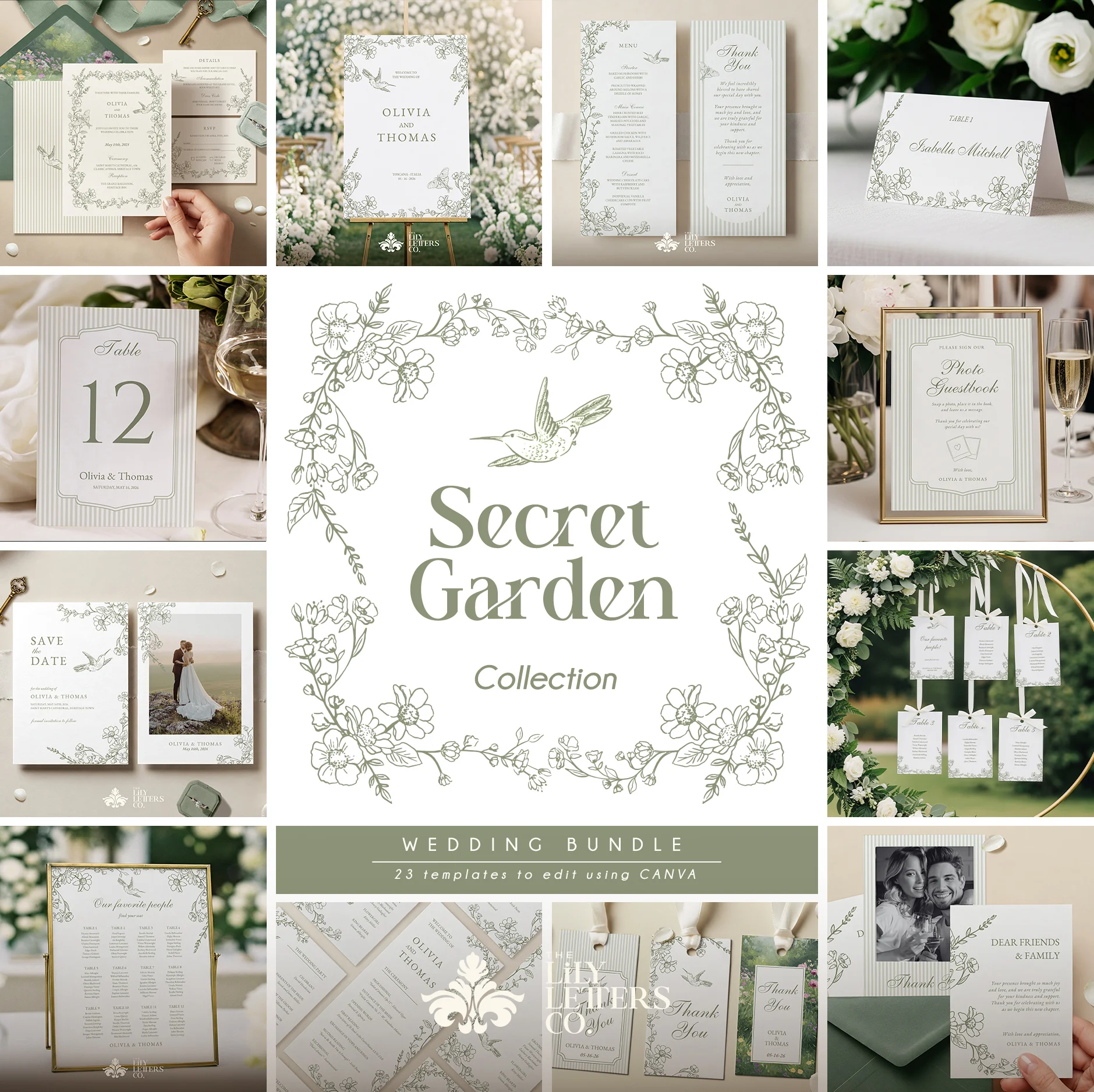
From wording to a finished invitation
Once your wording is ready, you don't need a designer or a $400 stationery order to make it look beautiful. Our editable wedding invitation templates are built for exactly this moment.
Drop in your wording, personalize the fonts and colors in Canva, and download a print-ready file. You keep full control and your budget.